


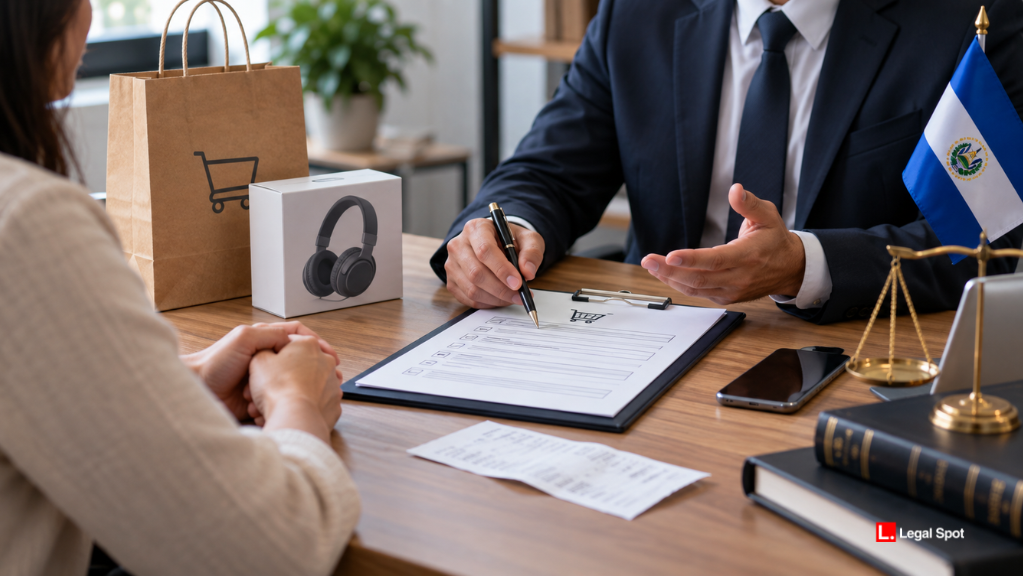
Consumer law is the branch of law that seeks to protect the rights of consumers with the aim of ensuring balance, certainty, and legal certainty in their relationships with suppliers.
In El Salvador, this right is enshrined in the 1983 Constitution, in the section on Economic Rights. Article 101, paragraph 2, states that “the State shall promote economic and social development by increasing production, productivity, and the rational use of resources. To the same end, it shall promote the various sectors of production and defend the interests of consumers.”.
As a result, various social movements—such as women’s organizations, consumer cooperatives, and community organizations in urban areas— united in their interest in promoting the defense of consumer rights, leading to the formation of the Center for Consumer Protection in 1991, which was legally incorporated in 1992 and acquired legal personality in 1995.
It was not until 1992 that the Consumer Protection Act was enacted, followed by its reform in 1996 and its comprehensive revision in 2005, the latter notable for modernizing consumer law regulations and establishing the Consumer Ombudsman’s Office and the National Consumer Protection System.
The Consumer Protection Agency is the institution responsible for promoting and defending consumer rights. These rights are set forth in Article 4, titled “Basic Consumer Rights,” which can generally be summarized as follows: Consumers have the right to shop safely, receive complete, accurate, and truthful information, pay a fair price, file a complaint in the event of a breach, and obtain a resolution when their rights are violated.
Now that we have a general understanding of consumer rights, it is important to understand who qualifies as a consumer. According to Article 3 of the Consumer Protection Act, a consumer is: “Any natural or legal person who acquires, uses, or enjoys goods or services, or who receives an offer of such goods or services, regardless of whether the producers, marketers, providers, suppliers, or distributors are public or private, individual or collective.”.
On the other hand, “Suppliers” are “any individual or legal entity, whether public or private, that engages in the production, manufacture, import, supply, construction, distribution, rental, provision, sale, or contracting of goods; processing, storage, or transportation; as well as the provision of services to consumers, in exchange for payment of a price, fee, or rate.”.
That said, if I have a dispute regarding a transaction with the supplier, can I file some kind of complaint?
Yes, the law allows consumers who believe their rights or legitimate interests have been affected by the actions of providers of goods or services to file a complaint with the Ombudsman’s Office, in order to resolve the dispute administratively. The Ombudsman’s Office offers flexibility by allowing complaints to be filed in writing, in person, by phone, or electronically through its official channels or via its website. These mechanisms aim to eliminate barriers to access and respond more quickly and efficiently to consumers.
It also has a Dispute Resolution Center, which seeks to resolve conflicts between consumers and suppliers through alternative dispute resolution methods in a simple, swift, free, and confidential manner. Among the alternative dispute resolution methods offered by the Dispute Resolution Center are conciliation, mediation, and arbitration, each with different characteristics and suited both to the parties’ preferences and to the nature of the dispute.
All of this is carried out under the National Consumer Protection System, which seeks to promote and develop consumer protection and is coordinated by the Consumer Protection Agency.
In conclusion, consumer law is a fundamental pillar for ensuring a balance between consumers and suppliers, especially in a market where, as a general rule, suppliers have more information and greater bargaining power than consumers, which is why the Consumer Protection Law and the Consumer Ombudsman’s Office serve as essential mechanisms for correcting this inequality by promoting transparent business practices and educating consumers about their rights and protections, thereby strengthening market functioning and contributing to the country’s economic and social development.
At Legal Spot, we recommend always seeking the assistance of an attorney when taking any action or filing a complaint with the Consumer Protection Agency. This way, you ensure comprehensive protection of your rights and make the best use of the resources this agency makes available.