

In El Salvador, the Health Registration It is a fundamental element for the importation and marketing of certain products subject to health controls. More than just an administrative formality, it represents the health authorization permitting the manufacture, import, distribution, and marketing of products within the country, in accordance with applicable regulations.
The Superintendency of Health Regulation (SRS) It is the agency responsible for regulating, monitoring, inspecting, and ensuring the health safety of products, establishments, activities, and services subject to such regulation.
What is a Health Registry?
Health Registration is the authorization through which the health authority verifies that a product meets the requirements of quality, safety, and other technical and legal requirements required for their import and sale in El Salvador.
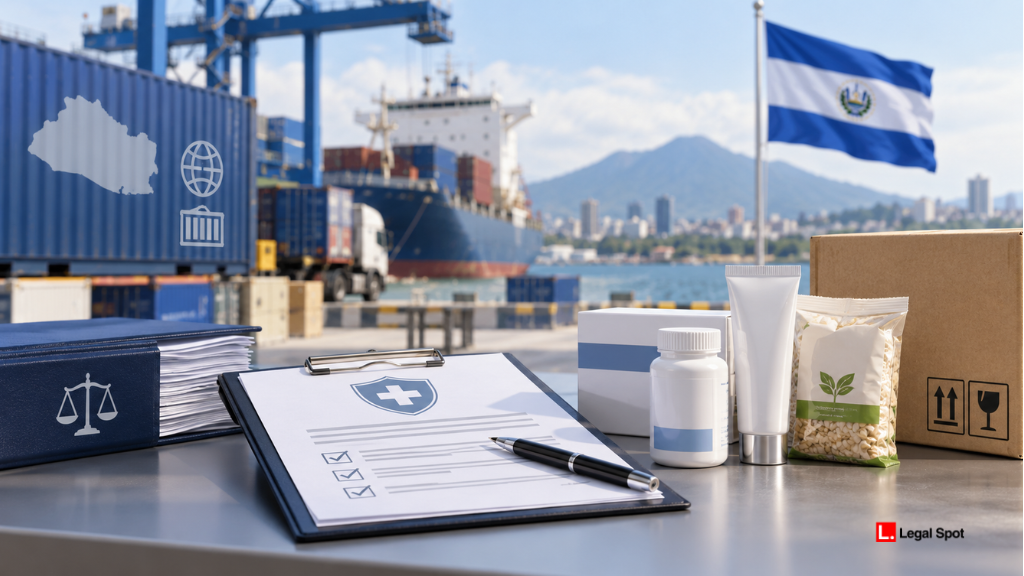
Products that may be subject to health registration include:
- Medications and pharmaceutical products.
- Medical devices and equipment.
- Cosmetics and personal care products.
- Food and beverages.
- Nutritional supplements.
- Regulated chemicals.
- Veterinary products.
- Tobacco and tobacco products.
- Other health technologies, in accordance with applicable regulations.
Why is this important for imports?
For an importer, obtaining the appropriate Health Registration may be an essential requirement for legally introducing a product into the Salvadoran market. Therefore, obtaining it should be considered Before making a commercial import, since the lack of authorization or failure to comply with health requirements can lead to delays in customs procedures, the inability to market the product, additional storage costs, and, depending on the case, administrative or health-related measures.
Consequently, proper planning for the Health Registry can prevent goods from entering the country without first obtaining the necessary authorizations.
Legal Basis
Health monitoring is based on the Constitution of the Republic of El Salvador, which establishes the State's duty to protect the health of the population. This mandate is implemented through applicable health and administrative legislation, including the Law on the Superintendency of Health Regulation, the Administrative Procedures Act and the Central American Technical Regulations (RTCA) for each product category.
In the case of food and beverages, the RTCA regulates aspects such as labeling, nutritional information, additives, microbiological criteria, and other technical requirements that must be met before the products can be marketed.
From an administrative law perspective, the Health Registry can be understood as a authorizing administrative act, the granting of which is contingent upon compliance with the requirements established by the regulations. Therefore, the procedure must be conducted in accordance with the principles of legality, objectivity, reasonableness, proportionality, transparency, legal certainty, and due administrative process.
Progress of the healthcare process
Previously, the processes related to the regulation and oversight of various medical devices were spread across different institutions and agencies, including the Higher Council for Public Health (CSSP), SISAM, and the National Directorate of Medicines (DNM/DINAC, depending on the type of product and regulatory period).
With the evolution of the institutional framework and the creation of the Superintendency of Health Regulation (SRS), the processes have undergone changes with regard to the competent authorities, requirements, and processing procedures.
For this reason, it is important for importers to verify which authority is responsible and what the current requirements are for each product before initiating a foreign trade transaction.
The Importance of Specialized Support
The health registration process may involve document review, technical requirements, labeling, nutritional information, certificates, manufacturer documentation, and other requirements that vary depending on the nature of the product.
Therefore, It is recommended that the process be carried out with the assistance of a specialized professional., especially when it comes to products that will be imported for the first time or when there are complex technical requirements.
Proper guidance allows for the early identification of applicable requirements, the review of documentation, the detection of potential inconsistencies, the tracking of the application with the competent authority, and the reduction of the risk of delays, objections, or unnecessary costs.
Conclusion
Health Registration should not be viewed merely as an additional requirement for importing, but rather as a Essential authorization as part of the process for importing and marketing products subject to health controls in El Salvador.
Proper planning and management of the Health Registry enables importers to reduce risks, avoid delays, and ensure that their products can be imported and marketed in accordance with Salvadoran law.
Applicable regulations:
- Constitution of the Republic of El Salvador.
- Law on the Superintendency of Health Regulation.
- Administrative Procedures Act.
- Applicable Central American Technical Regulations.
- RTCA 67.01.31:20.
- RTCA 67.01.07:10.